
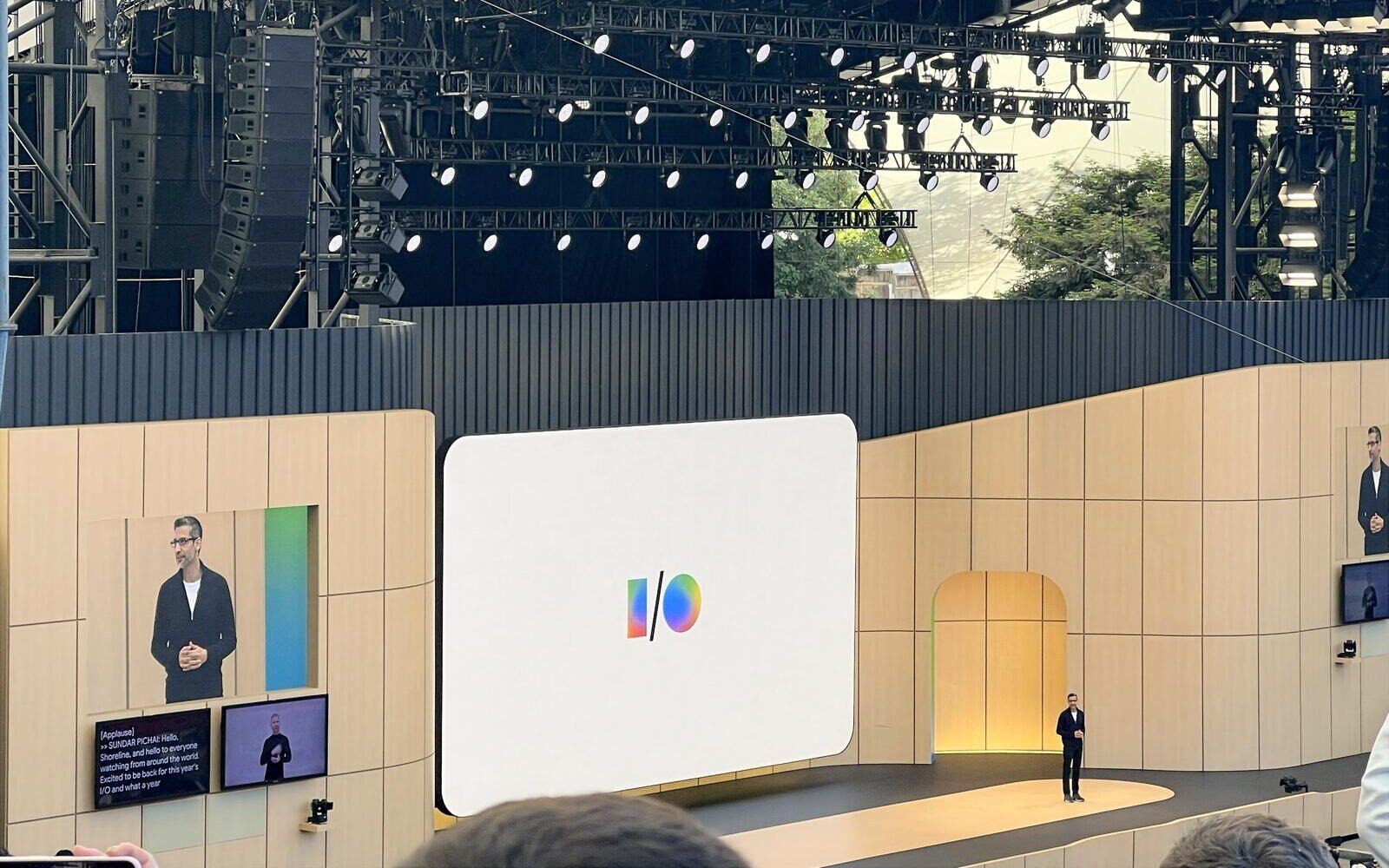
I flew home from Shoreline with a head cold and one clarifying idea. The week was packed: Spark, Antigravity, Gemini 3.5 Flash, Universal Cart, Personal Intelligence, Generative UI, 24/7 information agents, SynthID, C2PA Content Credentials. But the more I turned those announcements over on the flight, the more they collapsed into a single structural shift. Search has stopped being a destination. It has become a property of the environment.
Google I/O 2026 wasn’t the year of any single announcement. It was the year search became ubiquitous.
That’s the framing I’m staking my name on. The rest of this Google I/O 2026 recap unpacks what it actually means for enterprise SEO programs: how the major announcements support the thesis, how my pre-event predictions held up against reality, and the strategic questions your team should be asking before Q3.
TL;DR: Google I/O 2026 in one structural shift
- Search has become ubiquitous. It runs continuously across email, photos, browser tabs, physical mail, and purchase history, often without a typed query.
- Predictions scorecard: 3 right, 1 right but underestimated, 1 wrong in an interesting direction, 1 underdelivered by Google.
- Five announcements that prove the thesis: Personal Intelligence, 24/7 information agents, Universal Cart and UCP, the multimodal search box, and Gemini 3.5 Flash.
- The strategic shift nobody is talking about: Generative UI threatens B2B calculator and lead-gen pages directly.
What to do Monday morning: Audit your earned email presence by segment. Map content freshness across revenue-driving URLs. Treat structured data and Merchant Center feeds as tier-zero priority. Re-examine every interactive lead-gen asset against Generative UI exposure. Write a content provenance and SynthID disclosure policy.
From Search Everywhere to ubiquitous search: how Google I/O 2026 redefined every surface and signal
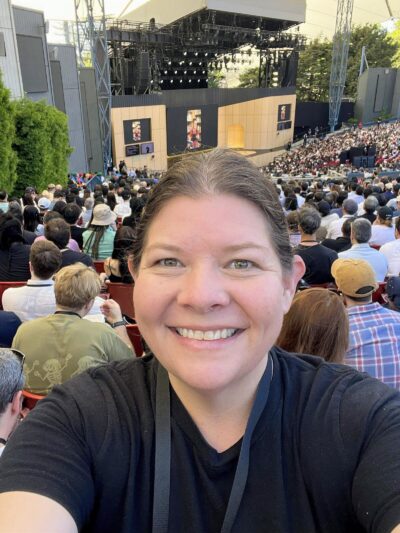
Laura Beatty at the Google I/O 2026 keynote, Shoreline Amphitheatre.
The concept of ubiquitous search builds directly on the Search Everywhere Optimization framework Rand Fishkin coined last year. Ubiquitous search moves past the search box to run continuously across every surface and signal a user touches. Gemini pulls from email, photos, open browser tabs, and physical mail via USPS Informed Delivery integration. Background processes monitor past purchase behavior, calendar context, and active subscriptions between active sessions. Gemini then synthesizes responses across all these signals, often providing answers without requiring a traditional results page.
Shoreline provided a concrete example of these capabilities in action. A user receives a physical mailer with a promo code via Informed Delivery. Gemini reads the digitized mail image, cross-references open browser tabs, and checks purchase history to surface a contextual shopping suggestion in AI Mode. The system identifies and acts on purchase intent across four different data surfaces before the user has typed a single query. Search occurs without an explicit prompt.
Brands with a presence in the user inbox, in physical mail, or in browsing history now occupy a live signal path. The implications for enterprise SEO are structural rather than incremental. Strategy has to evolve to account for how Gemini interprets brand signals across fragmented personal data layers.
If search is now ubiquitous, where does an enterprise SEO program actually live?
How my pre-I/O predictions actually held up
Before the keynote, I published five predictions for what I/O 2026 would deliver. Now that I’ve been in the room, here’s the honest scorecard.
| Prediction | Verdict | What I see now |
|---|---|---|
| AI Mode becomes the front door of Search | Right, but underestimated | The multimodal search box upgrade combined with Gemini 3.5 Flash as the default model means AI Mode is no longer a feature inside Search. It’s becoming the architecture of Search. Citation presence as the new average position holds. Enterprise teams that haven’t yet built manual AI visibility tracking are further behind than they realize. |
| Gemini gets a deeper seat at the Search table | Right, with a model named | Gemini 3.5 Flash is now the explicit default model powering AI Mode globally. The citation bar is meaningfully higher than the predicted version of this prediction. Generic content earns nothing. Proprietary data, distinct experience, and comparative claims are the price of admission. |
| The AI traffic vs. organic traffic measurement gap narrows | Wrong, in a more interesting direction | The gap didn’t narrow at I/O. It widened. 24/7 information agents synthesize updates between user sessions, breaking last-click attribution at the architectural level. The measurement infrastructure SEO teams need is no longer just better GSC reporting. It’s a new conceptual model for how brand reach gets measured when there are no clicks to count. |
| Migration signals get pickier | Too early to tell, directionally right | Google didn’t publish any formal AI-aware migration guidance at I/O, not that it was expected. Personal Intelligence and 24/7 agents introduce signal dependencies (inbox presence, content freshness, structured data accuracy) that make migration risk meaningfully higher than the pre-event prediction captured. Migration playbooks need updating regardless of whether Google publishes guidance. |
| Search Console gets an AI-aware glow-up | Underdelivered at I/O | The GSC upgrade didn’t materialize in the form predicted. Limited improvements were announced but nothing approaching query-level AI surface filtering or citation-level URL tracking. This remains the biggest unmet need in enterprise SEO measurement infrastructure. Build the manual tracking layer now. Don’t wait for Google to ship the fix. |
| The agentic web gets real | Right, and bigger than predicted | Universal Cart and UCP, 24/7 information agents, Personal Intelligence, and Generative UI together represent a more comprehensive realization of agentic search than the pre-event prediction anticipated. The structured-data-as-storefront framing is now a present-tense reality for ecommerce. The Quantum-Resilient Consensus Framework signals that infrastructure for safety and auditability of multi-agent systems is starting to mature. |
Net scorecard: three right, one right-but-underestimated, one wrong-in-an-interesting-direction, one underdelivered. The biggest miss was overestimating Google’s measurement infrastructure investment. The biggest underestimate was the speed and integration of the agentic shift.
The five announcements that prove ubiquitous search is real
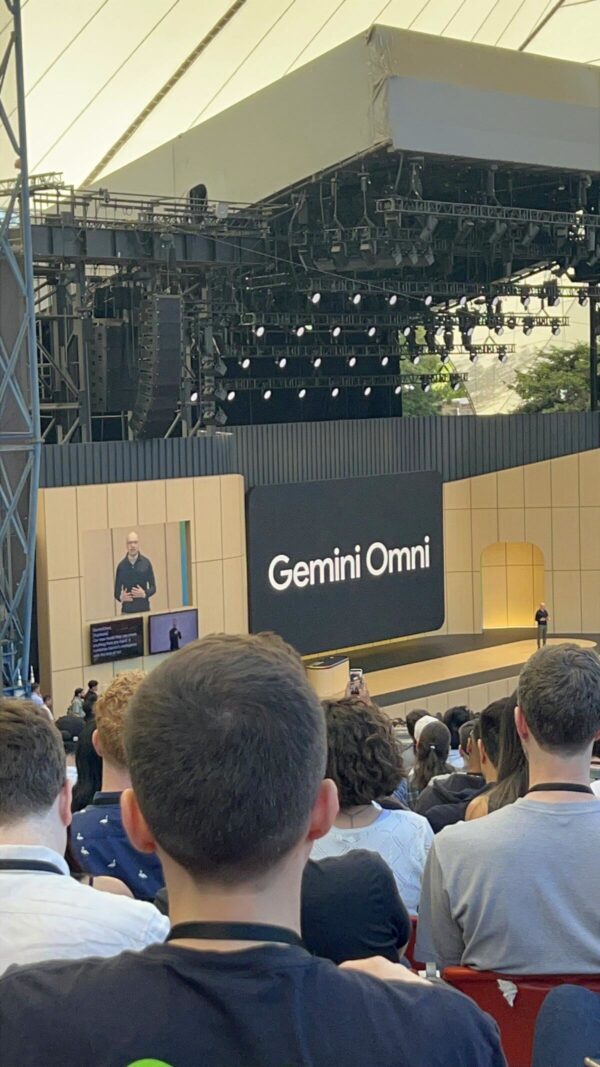
Gemini Omni announcements at Google I/O 2026.
Every major announcement at I/O 2026 fits the ubiquitous-search frame. These five are the ones that directly change what enterprise SEO programs are responsible for this quarter.
1. Personal Intelligence brings Gmail and Photos into Search
Personal Intelligence is now free and global, and it’s directly powering AI Mode personalization. Earned brand presence in the inbox (newsletters, order confirmations, loyalty receipts, support emails) is now a direct signal in personalized AI Mode responses. The line between your lifecycle marketing program and your organic search presence just collapsed. Your CRM strategy and your SEO strategy are now the same conversation.
2. 24/7 information agents that break last-click attribution
Background agents synthesize web updates for users between active sessions. They don’t generate traditional click-through traffic. Content freshness becomes critical because stale content gets bypassed entirely, even if it still holds rank today. If your evergreen content strategy relies on “publish once, update annually,” that model is broken. You also need to start thinking now about how you report on AI-driven brand reach when there are no clicks to count.
3. Universal Cart and the Universal Commerce Protocol
UCP is a persistent Gemini-powered shopping hub that completes multi-item checkouts inside the search surface without the user ever visiting your site. For ecommerce teams, structured data and Merchant Center feeds are no longer an optimization layer. They’re the storefront. If your feed has errors or gaps, you don’t exist in this channel. Category and product page optimization still matters, but UCP makes the data layer tier-zero priority.
4. The multimodal search box, the biggest upgrade in 25 years
Text, images, files, videos, and open Chrome tabs are now simultaneous inputs to a single query. A user can submit a screenshot of a competitor’s pricing page and ask Gemini to find a better option. They can share a product photo and ask for compatibility specs. Keyword density as a proxy for relevance is now meaningfully less useful. Deep contextual coverage, structured specificity, and clear comparative claims are what the new query surface rewards.
5. Gemini 3.5 Flash raises the citation bar globally
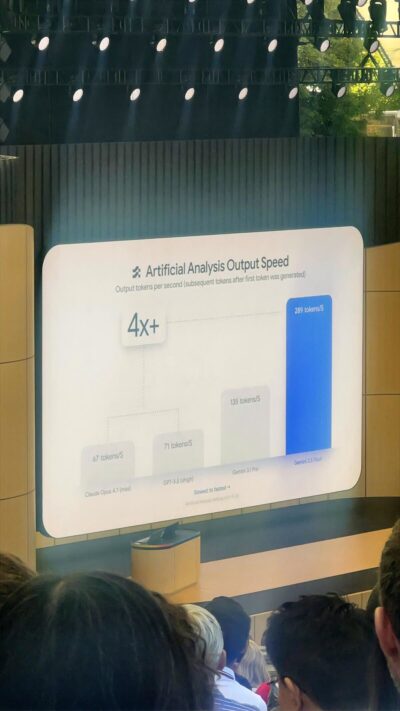
Gemini 3.5 Flash at 289 tokens/sec — 4x faster than Claude Opus 4.7, per Google I/O 2026.
With Gemini 3.5 Flash as the default model for AI Mode worldwide, improved agentic reasoning means the model reliably distinguishes original content from content that summarizes or paraphrases existing sources. Generic summaries earn no citations. Proprietary data, distinct practitioner experience, and specific comparative claims become the admission price for appearing in AI Mode responses. If your content library skews toward broadly covered topics without a clear original angle, this is the update that hurts you most.
The Generative UI threat to B2B lead generation
Here’s the I/O announcement that enterprise teams should be most focused on by Q3, and the one getting the least tactical attention in recap posts right now.
Generative UI builds custom interactive tools (calculators, ROI estimators, simulations, dashboards) on the fly inside the Search surface. For many B2B businesses, those calculators are primary lead-generation assets. A company that has spent years building a margin calculator, a total cost of ownership estimator, or a compliance cost modeler as a top-of-funnel capture tool is now looking at Google building a comparable tool inline, without the user ever visiting the site.
The strategic questions your team needs to answer are not comfortable ones. Can you continue driving direct traffic with tools that Generative UI can approximate? What proprietary value can you add that Google’s version cannot replicate? How do you signal to the market that you have better, more specific, more trusted data, without handing that data to Google for free as part of the process?
The Yelp parallel is instructive here. Yelp negotiated a structured data partnership with OpenAI while simultaneously blocking unauthorized scraping. The result was that Yelp’s data appeared in AI responses in a way that still credited and directed users back to Yelp. Other brands are making similar moves. But here’s the deeper concern: that kind of negotiating position requires scale and legal bandwidth that mid-market businesses often don’t have. Large brands may be able to structure favorable data-partnership agreements. Mid-market and smaller businesses that lose lead-gen surfaces may have no comparable replacement and no leverage to negotiate one.
The question of who controls the relationship with the user, and who benefits from that control as agentic search matures, belongs on the agenda of every Q3 review I’m helping clients prepare.
A note on AI safety and the quantum-resilient consensus framework
Google introduced the Quantum-Resilient Consensus Framework at I/O in direct response to incidents like the Antigravity IDE autonomous-deletion event. The framework uses CRYSTALS-Kyber post-quantum digital signatures for agent-to-agent authentication. For enterprise teams running multi-agent workflows, the signal here is that the governance and auditability infrastructure for these systems is beginning to mature alongside the capabilities themselves. That matters for timeline planning. It suggests the agentic-search shift is being built to last, not just to demo.
The quantum sessions were, honestly, the most personally exciting part of the week for me. A dedicated post on that topic is coming separately. I’ll resist opening that thread here before it’s ready.
What this Google I/O 2026 recap means for your enterprise SEO program
Every section above points toward analysis. This one is the Monday-morning translation. These are the five actions your team can move on before the next quarterly planning cycle.
- Audit your earned email presence by customer segment. Personal Intelligence makes inbox-level brand visibility a personalization signal in AI Mode. Know what your brand looks like in the inboxes of your highest-value segments before you assume that channel is someone else’s problem.
- Map content freshness across your top revenue-driving URLs. 24/7 information agents bypass stale content even when it still holds rank. Identify the URLs most exposed to freshness-based demotion and build a standing update queue.
- Treat structured data and Merchant Center feeds as tier-zero for ecommerce. UCP is built entirely on this layer. Feeds with errors or gaps aren’t missing optimization opportunities. They’re missing a channel entirely.
- Re-examine every B2B calculator, ROI tool, and interactive lead-gen asset on your site. Identify what proprietary value you can add that Generative UI cannot approximate. If a data-partnership conversation applies to your scale and category, start it now rather than reactively.
- Add a content-provenance and SynthID disclosure policy to your editorial guidelines. If you use AI-generated imagery or video, C2PA Content Credentials are not a compliance checkbox. They’re an E-E-A-T signal in a world where search runs across every surface a user touches.
The common thread across all five is that ubiquitous search rewards signal quality at every layer, not just on the page. If your SEO program still lives entirely in the CMS and Search Console, that scope is no longer sufficient for the environment Google is building.
From the floor
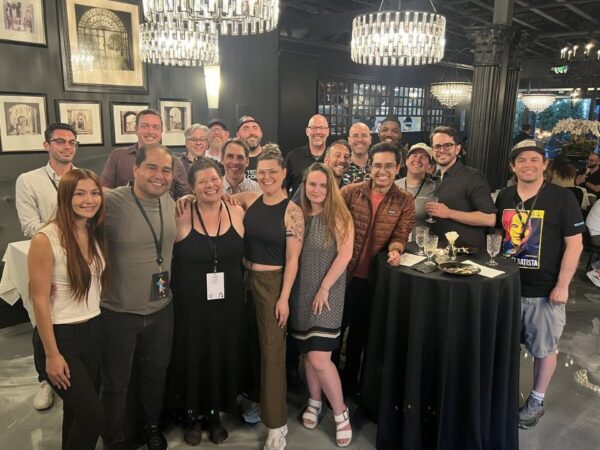
Previsible × Tech SEO Connect Salon Dinner, Google I/O 2026 week.
The Salon Dinner hosted by Previsible × Tech SEO Connect was a highlight of the week. Shout-outs to Noah from The SEO Community, to Aimee Jurenka and Celeste Gonzalez for the log file deep-dive conversation, and to Jordan Koene for the AI visibility platforms discussion. I got a brief moment with Jegan as well, which was great. Ryan was a genuinely excellent host this year, even though we didn’t manage to overlap in person. A fuller community roundup will go up as a separate LinkedIn post soon.
The practitioner community at I/O is, as always, where the most useful signal lives. Grateful to still be in those rooms after 20+ years in SEO.
The plan from here
Search is now ubiquitous. Not approaching it, not trending toward it. Structurally present across surfaces, signals, and sessions in a way that redefines the scope of what enterprise SEO programs are responsible for. The individual announcements from this year’s event aren’t isolated features to track on a product roadmap. They’re evidence of a single architectural shift that’s already in motion.
If you want help thinking through what that shift means for your specific program, a post-I/O strategy session is the fastest way to close the gap between what you heard at I/O and what your team should actually be doing. For context on where all of this started, the pre-event predictions post is worth the read alongside this one. If you want to verify any of the claims here against the source, the full Google I/O 2026 keynote is on YouTube. And a dedicated post on the quantum sessions is coming shortly for those who want to go deeper there.
No panic. No worries. Just stick to the plan.
Laura Beatty is the founder of No Bad Days Digital, a boutique SEO consultancy focused on technical SEO, high-stakes site migrations, and AI search strategy. Her career has included enterprise SEO experience on brands such as HP, Microsoft, Mastercard, and David Yurman through prior agency engagements.
One Comment
Comments are closed.
[…] attending Google I/O earlier this year, I came away thinking about how search was becoming more ubiquitous. brightonSEO reinforced that […]